


Higher expenses and lower revenue are spelling bad news for New Brunswick’s fiscal situation.
This year’s projected deficit has ballooned to nearly $669 million, up from the budgeted amount of $549 million.
Officials blamed higher expenses in health and social development, combined with lower-than-expected revenue.
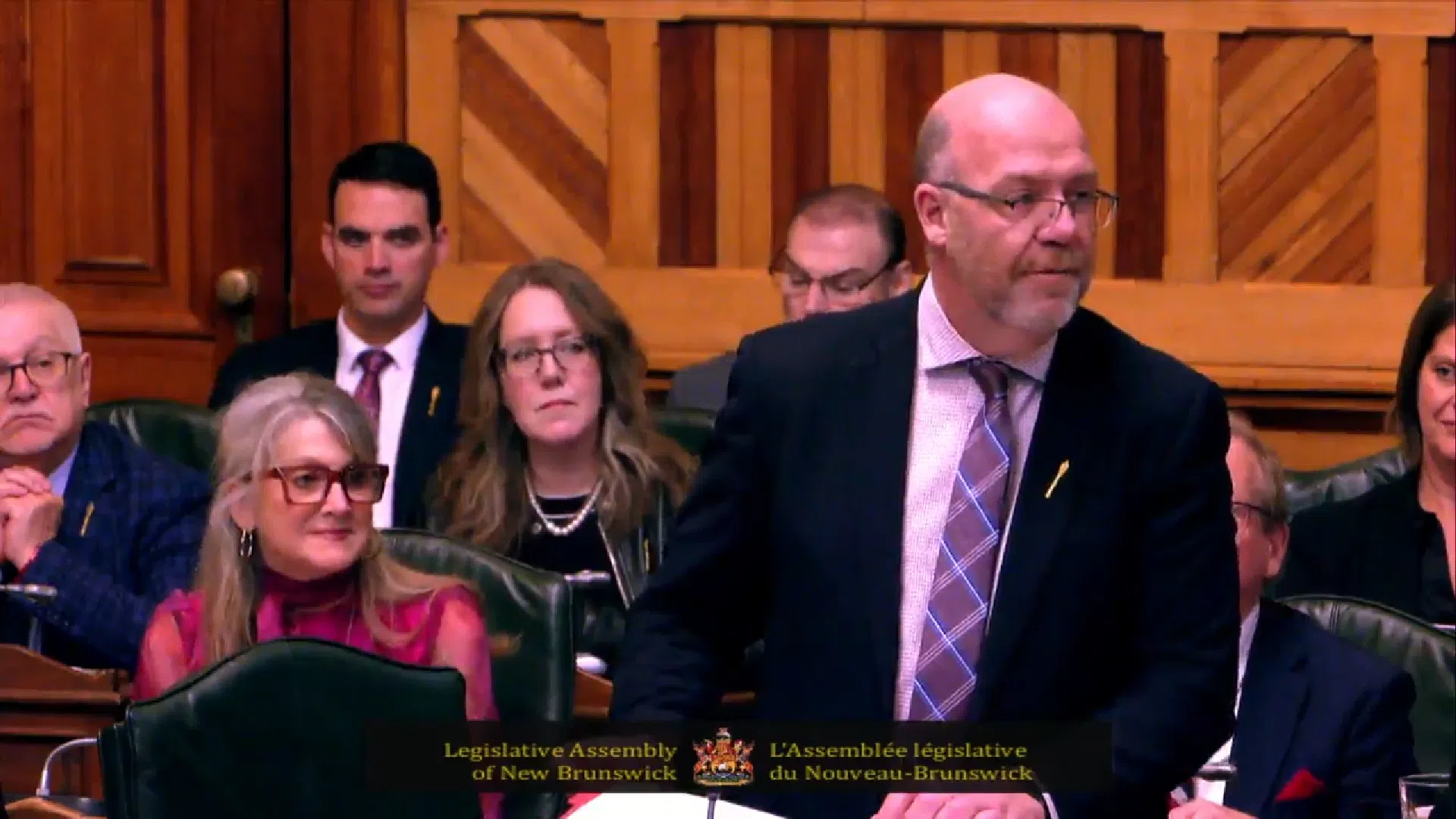
Finance Minister René Legacy, speaking with reporters on Tuesday, said a lot of efforts are underway to try and rein in spending.
“Some departments, because of timing, have gone a little bit further than others, I could think of education, but some of the big departments are still doing their work,” said Legacy.
Expenses up, revenue down
Total expenses are projected to exceed the budget by $60 million this fiscal year, according to the budget documents.
Social development is projected to be over budget by $93.7 million, mainly due to increased demands for services within Child Welfare and Youth Services, Income Security, and Seniors and Long-Term Care.
Health is also projected to be over budget by $39.1 million, mainly due to higher operating costs in the regional health authorities. Officials said these costs are partially offset by under-expenditures in primary health care.
Meanwhile, total revenue is projected to be $59.6 million lower than the budget, in part due to decreased federal conditional grants.
But Legacy said unstable trade conditions, particularly with the United States, are also starting to affect projections. New Brunswick is estimating 0.9 per cent economic growth for the province in 2025, slightly below the private sector forecasters’ average of 1.2 per cent.
“We should have a better picture about the impact that tariffs and trade will have on our projections as we progress into second and third quarters,” he said.
“However, we are hearing from industry that the economic uncertainty and unstable trade conditions are causing additional stressors, and they must find ways to counter those impacts.”
The finance minister said they are also still awaiting updated tax revenue estimates from the federal government, which are not expected until the budget comes out this fall.
Net debt also increasing
New Brunswick’s net debt is expected to increase to $13.6 billion compared to the $13.4 billion the province initially budgeted for, but Legacy noted that our net debt-to-GDP ratio remains one of the lowest in the country.
The Liberal government ran on a promise to deliver a balanced budget in each year of its mandate — but the budget released in March showed no balanced budget through 2028-29.
Legacy said his government wants to balance the books sooner rather than later, but also wants to ensure investments are made in areas needed most.
“We will maintain our approach to sound financial management, but we must find a way to balance this responsibility and accountability with the quality of life New Brunswickers deserve,” he added.
“We continue to invest in health care, education, housing, affordability, trade, and infrastructure, where the pressures are greatest and where New Brunswickers have told us we must focus our efforts.”
Opposition responds to fiscal update
The Opposition finance critic said New Brunswick taxpayers should be alarmed by the government’s latest fiscal update.
“What was promised as sound management and responsible budgeting has quickly collapsed into reckless spending, broken commitments, and a growing deficit crisis,” Progressive Conservative MLA Don Monahan said in a news release.
“This is not responsible leadership, it’s financial recklessness, and taxpayers will be left footing the bill. Even more troubling, independent forecasts warned the final deficit could be higher still.”
Monahan said the only way the Liberal government will be able to take of New Brunswickers is by raising taxes.
“What we are seeing is a government that is spending without results, taxing without a plan, and promising without delivering.”